
Knowledge in Action: How Retrieval-Augmented Generation is Transforming Businesses
How Retrieval-Augmented Generation is Transforming Businesses
READ THE PAPER
Imagine this: A guest arrives at the hotel on a sunny morning, after a long journey with their family and full of anticipation for their vacation. Already in the morning, they are scheduled to participate in an exclusive welcome event, followed by a guided hiking program and dinner at a festival organized by the hotel for its guests. The requirements are clear: The guest should feel welcome from the very first minute. The receptionist must therefore quickly and efficiently check which events and activities the guest has booked, which routes will best take them to the program items, and whether there are any special notes or preferences, without having to search through emails, paper lists, or various programs. Everything at a glance. Everything flowing smoothly. So that the vacation gets off to a smooth start for every one involved.
What sounds like a vision of the future is already feasible according to the latest research, with Retrieval-Augmented Generation, or RAG for short. This term refers to a method that combines AI-supported language models with internal company knowledge databases to deliver precise, context-relevant answers. But RAG is not just a technical concept – it is a key to transforming workflows, automating support processes, and increasing efficiency in daily work, especially in the hotel industry.
But how widespread is this technology actually in the industry? What challenges remain, and what is already working well? To answer these questions, we, the team at CASABLANCA hotelsoftware, were invited to participate in an interview-study conducted by researchers at the University of Innsbruck. The aim was to assess the current status of RAG implementation in practice: Which use cases are being pursued? What requirements do companies place on RAG? What technical and organizational hurdles still exist?
What ist Retrieval-Augmented Generation (RAG)?
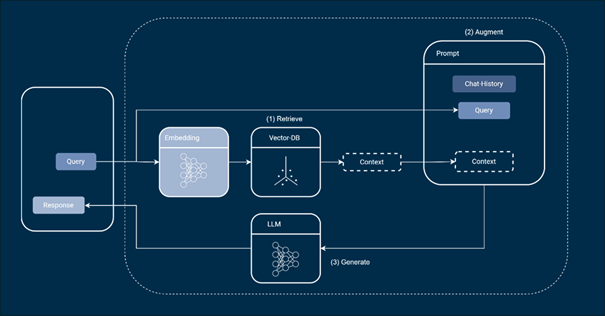
Retrieval-Augmented Generation, or RAG for short, is a method in the field of knowledge management that makes it possible to supplement language models with specific, mostly company-internal knowledge, exactly when it is needed. Unlike conventional AI models, which complete their knowledge at the time of training, RAG specifically draws on current or specialized sources of information for each query. The process consists of two steps: First, relevant knowledge is retrieved from a knowledge database based on the input query (retrieval), then a precise, context-related response is generated using a language model (generation).
In simple terms, RAG can be thought of as a combination of a librarian and a writer: the librarian searches for the appropriate sources of information, and the writer then formulates a comprehensible response tailored to the context. This approach differs significantly from classic large language models (LLMs), which are based exclusively on their original training knowledge, or from so-called fine-tuning approaches, in which the model is adapted to specific tasks but still does not allow for dynamic knowledge updates.
RAG has avariety of objectives: On the one hand, it aims to significantly reduce the number of so-called hallucinations i.e., answers that sound plausible but are factually incorrect. On the other hand, it increases the accuracy and relevance of answers by ensuring that the model always has access to the latest information. Another key advantage of RAG is the ability to integrate internal company data sources, such as manuals, FAQs, or databases, directly into the response process without the need for extensive model training.
RAG in industry: Where is it used?
In practice, RAG has established itself in three key areas of application in particular. The first and most widespread use case is question answering (QA). Here, RAG is used to provide employees or customers with quick and accurate answers to specific queries. For example, in internal knowledge management, where hotel employees can access information on booking policies or services at the touch of a button. Another prominent example is support chatbots that answer guest inquiries outside of regular working hours, whether about luggage storage, cancellation policies, or local events and always access up-to-date, reliable data. An example of such an application at our company is the internal Support Copilot, which is used for internal support requests.
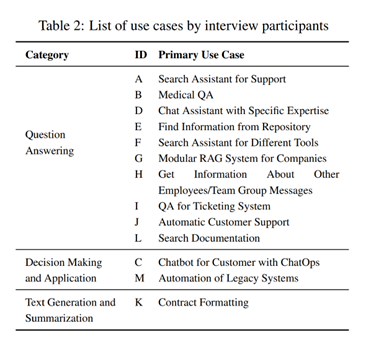
A second important area of application is automated decision support. RAG can help systematically trigger actions based on inputs from various sources. For example it can automatically create support tickets when a recurring issue such as room cleanliness complaints from guest feedback online reviews or internal staff reports is detected. RAG can also generate comprehensive reports at the push of a button by pulling together data from guest surveys online ratings service logs and internal quality checks without the need for manual compilation. This allows hotel managers to quickly assess performance trends identify areas for improvement and make informed decisions all based on unified insights drawn from diverse data streams.
A third application case, which is becoming increasingly relevant, is document formatting and summarization, particularly in automated contract processing. In this context, RAG can assist, for instance, in drafting rental agreements formeeting rooms or reviewing supplier contracts by identifying relevant clauses, summarizing contract content, or even flagging deviations from standard templates. This saves not only time but also reduces sources of error caused bymanual interventions.
These examples show that RAG is much more than just a research topic, it is a practical tool that can make work processes in the hospitality industry and other sectors more efficient, reliable, and customer-friendly.
Requirements for Industrial RAG Systems
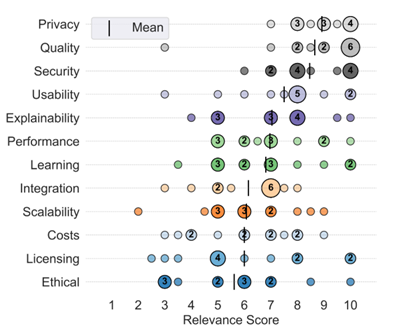
When implementing RAG, technical feasibility and added value are not the only priorities security and the protection of sensitive data are crucial. Especially in industries like hospitality, where personal guest data is processed, such as during room reservations or adjustments for special needs, it is of utmost importance that this information does not fall into the wrong hands. Unprotected access to internal knowledge databases or improper storage of queries can lead to serious data privacy breaches.
In addition to data privacy, the quality of the responses plays a central role. But what does "good enough" mean in the context of AI-generated answers? It’s not only about factual accuracy, but also about relevance, clarity, and the trustworthiness of the generated responses. Companies must define clear criteria for when a response is considered safe and helpful, particularly when it is directly passed on to customers without human review.
Further key requirements for a RAG solution include usability, scalability, and seamless integration into existing IT systems. The technology must be intuitive to use or both employees and end customers. Moreover, it should be capable of growing alongside the business as more data and application scenarios are added.
Challenges in Practice
Despite all the technical possibilities and promising use cases, the implementation of RAG turns out to be anything but trivial in practice. A central issue lies in the data itself. In many companies, information exists in unstructured, inconsistent formats or is fragmented across various systems. Whether it's emails PDF documents or internal notes consistent formats that allow for automated processing are often missing. On top of that language related challenges such as abbreviations regional dialects or unclear terms can cause even minor differences in wording to lead an AI model to miss important information or misunderstand it.
There are also significant technical challenges. One key issue is how to break documents into manageable pieces—a process called chunking. If the chunks are too large, important details can be lost; if they're too small, the AI may struggle to understand the overall context. Equally important are the quality of embeddings, which determine how well the text is represented in a format the AI can work with, and prompt engineering, which involves crafting queries to get the most accurate results from the model.
In addition, recent research by google has highlighted theoretical limitations of neural embeddings that must be considered in practice. Studies in learning theory show that the number of unique top-k document sets a model can return as results is fundamentally limited by the dimensionality of the embeddings. In simpler terms, no matter how well a model is trained, its ability to rank or distinguish between different combinations of documents is mathematically constrained by how many numbers (dimensions) are used to represent each document or query. Even in simplified scenarios—such as when only the top two results are considered—this limitation remains evident.
Researchers tested this by directly optimizing on the test set, giving the model full access to the data in order to eliminate any training-related shortcomings. Despite these ideal conditions, the limitation persisted, confirming that it is not a flaw in training methods but a fundamental characteristic of embedding-based models.This means that simply increasing model size or improving training techniques may not be enough to overcome these constraints. Finding the right balance between information density and processability is therefore crucial—often requiring more experimentation than established theory.
The human factor also plays a role even though RAG operates automatically the user remains a central actor whether in entering queries interpreting responses or correcting things when they go wrong. Dealing with hallucinations plausible sounding but factually incorrect responses remains a challenge that requires both technical and conceptual solutions.
Evaluation and Assessment: How Good is Good Enough?
Assessing the quality of RAG-based systems is a crucial prerequisite for their reliableuse in real-world applications. Both manual and automated evaluation methods are employed — each with its own strengths and limitations.
In manual evaluation, user feedback, expert analyses, and targeted test questions play a central role. Users, whether hotel staff at the reception desk or guests asking a question via a chatbot—provide valuable insights into whether an answer was helpful, understandable, and appropriate. Experts, on the other hand, can conduct more in-depth assessments to determine whether the responses are factually correct, consistent, and aligned with company standards. In addition ,targeted test questions are used to evaluate system performance undercontrolled conditions—such as in the case of ambiguous queries or the handling of special cases.
Alongside these manual methods, there are also automated evaluation frameworks, such as RAGAS. These frameworks measure the quality of RAG responses using clearly defined metrics like answer accuracy, relevance, coherence, and robustness, meaning whether the answer is correct, fits the context, is fluently formulated, and remains stable even with slightly modified inputs. An excellent overview of automated RAG evaluation is provided in this study. Despite these technical options, such automated methods are still rarely used in practice. Reasons for this include, among others, the lack of domain-specific datasets, the complexity of the metrics, and the insufficient integration of such frameworks into existing development processes.
Future Perspectives and Recommendations
The development of RAG is far from complete—in fact, the coming years will show just how deeply AI-supported knowledge processing can be integrated into the working world. One particularly exciting trend is Agentic RAG , where systems not only provide answers but also independently suggest or even execute decisions—such as prioritizing tasks in customer service. You can read more about this topic in our recently published whitepaper: The Hotel Industry in Transition: Are We Already in QualityLand? – CASABLANCA hotelsoftware.
Moreover, multimodality is becoming increasingly important: future RAG systems will process not only text but also integrate images, videos, or tabular data—for example, to give guests a visual overview of accessible room options, which fits to their needs. Another trend is personalization at different levels, where RAG systems learn to recognize individual preferences and generate tailored responses—such as in room recommendations or in the automatic creation of personalized offers.
However, to make use of these potentials, companies need clear guidelines: Start with well-defined use cases where added value can be directly measured—such as internal knowledge search or customer support. Invest in the quality of your data, because RAG is only as good as the information it can access. And build a modular system that can adapt to changing requirements without needing to be completely redeveloped each time. The recently introduced Model Context Protocol can help make internal data available to models in a standardized and efficient way.
At the same time, ethical aspects must not be overlooked. Handling bias and ethical risks is especially important in automated decision-making. Companies must ensure their systems remain fair, transparent, and controllable. Transparency regarding how answers are generated and control over which decisions are delegated are key success factors.
Knowledge-Based Path into the Future
For CASABLANCA hotelsoftware, the direction is clear: in the future, knowledge will no longer be merely stored and retrieved, but actively used, networked, and further developed, directly along our vision of "making 5-star experiences accessible to more people around the world." RAG technologies offer us the opportunity to elevate our mission — "giving our customers back more time for what truly matters — creating unique guest experiences".
The study conducted in collaboration with the University of Innsbruck has shown that RAG is not a panacea, but a powerful tool—provided you understand its strengths and limitations. It can accelerate internal processes, reduce errors, and lighten the workload for employees—but it requires the right data, suitable use cases, and intelligent integration into existing systems. In practice, this means starting with measurable use cases, ensuring that the data basis for RAG is of high quality and well structured, and building a modular architecture that can be flexibly adapted to new requirements.
If you would like to help shape this future — whether as a partner, developer, or customer — please get in touch with us. Let’s jointly design the hospitality industry of the future — with smart software, a clear vision, and human understanding.